MOONLIGHT – textual analysis

Here is my essay on a sequence from Moonlight:


Overall reflection:

I find that this was generally and OK essay and wasn’t that bad. However at times I was reusing quotes which isn’t necessary and I was also confusing my sentences a lot despite thorough proof reading. I also need to expand greater into the cultural context of the movie although touched on I didn’t expand on it as much as I could have. It would also be good to get some more quotes for the cultural context of the movie however this was a lot harder to find as they are very broad and don’t really cover exactly what was mentioned in Moonlight.

EBI: next time I should get someone else to proof-read my work, and I need to go more in depth into the cultural context of the movie.

Distant and Present effect in Man On Wire (2008)

The present and distant effect is a way of describing how the audience feels in relation to the content they are viewing, and the different techniques film makers use in order to achieve one of the two effects. For example, the footage may be taken from long distances (extreme long shot, bird’s eye view). Also non-diegetic sound (sound which would not be heard by the people in the scene e.g. background music) is used to distance the audience from the content. In Man On Wire we analysed different techniques that made the audience feel present or distant.

here is a slide show with some examples:

Shawshank final essay + feedback

I read the feedback from the teacher and found that I have improved my film elements analysis since the Pan’s Labyrinth essay, going from a 4/12 to a 9/12. However I went down on my cultural context mark from the last essay going from a 5/8 to a 3/8.

For my next essay I need to apply what I learned about analysing film elements in greater depth by honing in on one specific element of a scene rather than covering multiple in one paragraph. I also need to focus on my cultural context, I need to reference my sources and include a range of quotes from the sources.

Genre and narrative analysis of Shawshank Redemption

This is my analysis of genre in The Shawshank Redemption: 

In this table we can clearly see that The Shawshank Redemption follows many of the common genre elements of prison movies, like:

  • Story – The film follows Andy Dufrense and how his time at Shawshank prison was, which friends he made which enemies he made. At the end of the story we find out how Andy escaped, it follows the general conventions of many prison/prison break stories.
  • Themes – There are themes of freedom and escape from the cruel systems and regimes with the prison guards and Warden Norton. Themes of hope with Red always mentioning to Andy how “Hope is a good thing… and no good thing ever dies” and how Andy despite being picked on by Bogs and the Warden managed to escape the prison to Mexico coast and the Pacific ocean. There are also themes of institutionalisation, where you stay in the prison so long that you become so used to the rules that you become institutionalised and you only know the prison. With Brooks once his sentence was up and he was let out of the prison he ended up killing himself because he missed the prison and he was so used to the prison life.
  • Characters – There are the generic prison characters with “Bogs” the bully who picks on Andy, the “Andy” the ‘fresh meat’ and “Warden Norton” the cruel and evil prison warden.
  • Setting – The film is set in a desolate desert far from civilisation much like many other prison movies. The prison also has the huge, high walls which tower over the prisoners and the classic metal barring that goes along the front of the cells.
  • Mise-en-scene (iconography) – There are the classic blue prison uniforms and denim jeans, there’s also the huge courtyard with sports equipment. Lots things you will see in many classic prison movies.
  • Production Techniques – There’s lots of dimly lit cells, there’s a drone shot showing the expanse of the entire prison. Very dull, tertiary colours are very present throughout the film which mimics the very boring and dull nature of prisons and the repetitiveness of the routine.

, Overall we can clearly see that The Shawshank Redemption follows so many of the classic prison genre elements.

Narrative

The narrative voiceover of Red is a very calming and soothing voice which shows us through Andy’s story. Red is a first person narrator. This means the voice only tells us what Red knows and doesn’t talk about anything Andy thinks just what Red is told by Andy. Red tells a story of hope to eventually escape from Shawshank prison, where themes of institutionalisation are prevalent throughout with the thought of giving up hope being the reason many die outside of prison through suicide. Red gives Andy the hope to  eventually escape from Shawshank prison which then gives Red the hope to find his friend on the coast of Mexico. Overall the narration gives the audience a look into Red’s eyes and his account of the story of Shawshank prison.

British Social Realism & This is England

British social realism is a movement in film which aims to capture the gritty and tough life many working class British people go through everyday. This is a reaction to the many hero films which dominated the industry with happy endings. It led to an uproar of directors challenging the norm and creating a film which gave the media representation to the largely marginalized population. This is incredibly apparent throughout This Is England (2006) as it contains many of the common conventions of British social realism films such as:

This Is England – [FILMGRAB]

Location – This is England is shot on location in Nottingham. The film shows gritty, suburban, compact English flats. Broken down, red brick alleyways and damaged pavements. This reflects the realistic look of British Social Realist films. 

This Is England – [FILMGRAB]Tim Verlaan on X: "Revisited the site of the first @FailedArch workshop in Nottingham, which was a shooting location for Anton Corbijn's 'Control' and @ShadyMeadows's 'This is England'. The flats and underpass

Characters – Shaun a bullied working class child with an absent father figure following the Falkland’s War. This is a perfect example of the normal working class characters that many British social realism films aim to follow. It also shows the character of Combo who is a mentally damaged man following his rough childhood and 3 years in prison. This Is England | Reviews | Screen
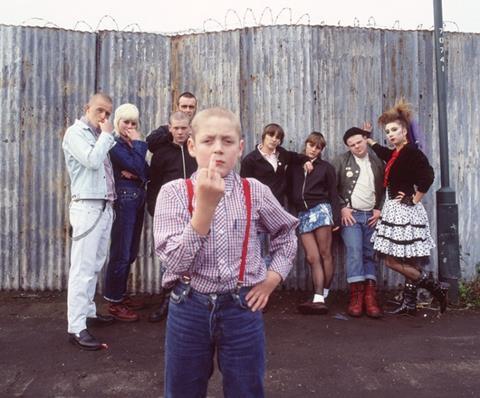
Themes – This is England shows the vulnerability of the younger population and how they can be taken advantage of by the older generation. It also challenges the stereotypical idea of skinheads that the majority population viewed, by showing themes of family and belonging through the character Woody.

Production techniques – Shane Meadows uses lots of long distant shots and long takes in This Is England (2006). This distances the audience from the action and makes the audience feel as if they are observing the action rather than being a part of it. Natural lightning is used in a lot of shots to make the production feel more realistic and natural. British social realism films use these techniques often to replicate real life and the atmosphere. 

Story – This Is England (2006) follows 12 year old working class Shaun who’s father died in the Falklands war. Shaun gets bullied at school and is picked on for looking like an uncool reporter and having no father figure. He then finds Wood and his skinhead gang and decides to join them, he then finds a father figure in Woody . The film includes themes of rebellion against the system and fatherhood (or absence of)

This Is England - Film4


Pan’s Labyrinth – Final Essay

Reflection for my final essay for Pan’s labyrinth with the title: ‘The Pale Man’s lair. How does mise-en-scene communicate meaning for the audience and reinforce the themes & messages that Guillermo Del Toro is trying to communicate in Pan’s Labyrinth?’ (28 marks)

WWW: I do my cultural context very well and I connect my points to the wider story very effectively.

EBI: When talking about how the film extracts convey the chosen meaning I need to hone in on specific moments in paragraphs because I use too many at once. Also I need to cite my sources when using quotes.

Mise-en-scene Captain’s Feast

The Captain’s Feast establishes the nature of the fascist ruling class in rural Spain and the attitudes and values of Captain Vidal, the villain in the film. The feast is a scene of indulgence, greed and power. Vidal is a fascist brute, he is proud of his reputation and dominates the scene. The guests are hypocrites and prove to be arrogant, callous & heartless. Carmen, seems out of place and is represented as fragile, elegant, cowed and intimidated by the other guests, we also get the impression that Vidal views her with contempt.

These are ideas are communicated in the mise-en-scene through action, where Vidal is placed at the head of the table sat taut and upright which connotes that he is the boss of the household and has of authority over everyone else at the table, which links back to the theme of control and power he has as captain.

Context & Pan’s Labyrinth

This is my context analysis of Pan’s Labyrinth, which means looking at a greater detail as to why Del Toro made the movie the way he did. This is important when analysing films as it helps us fully understand fully what is happening in the films in relation to historical context, which are historical events which happen during the films production and also historical events which happened when the film is set, and also cultural and artistic context, which is cultural references made in the film. I did the article 1 slide and I found the article very interesting and full of detail about the context.